

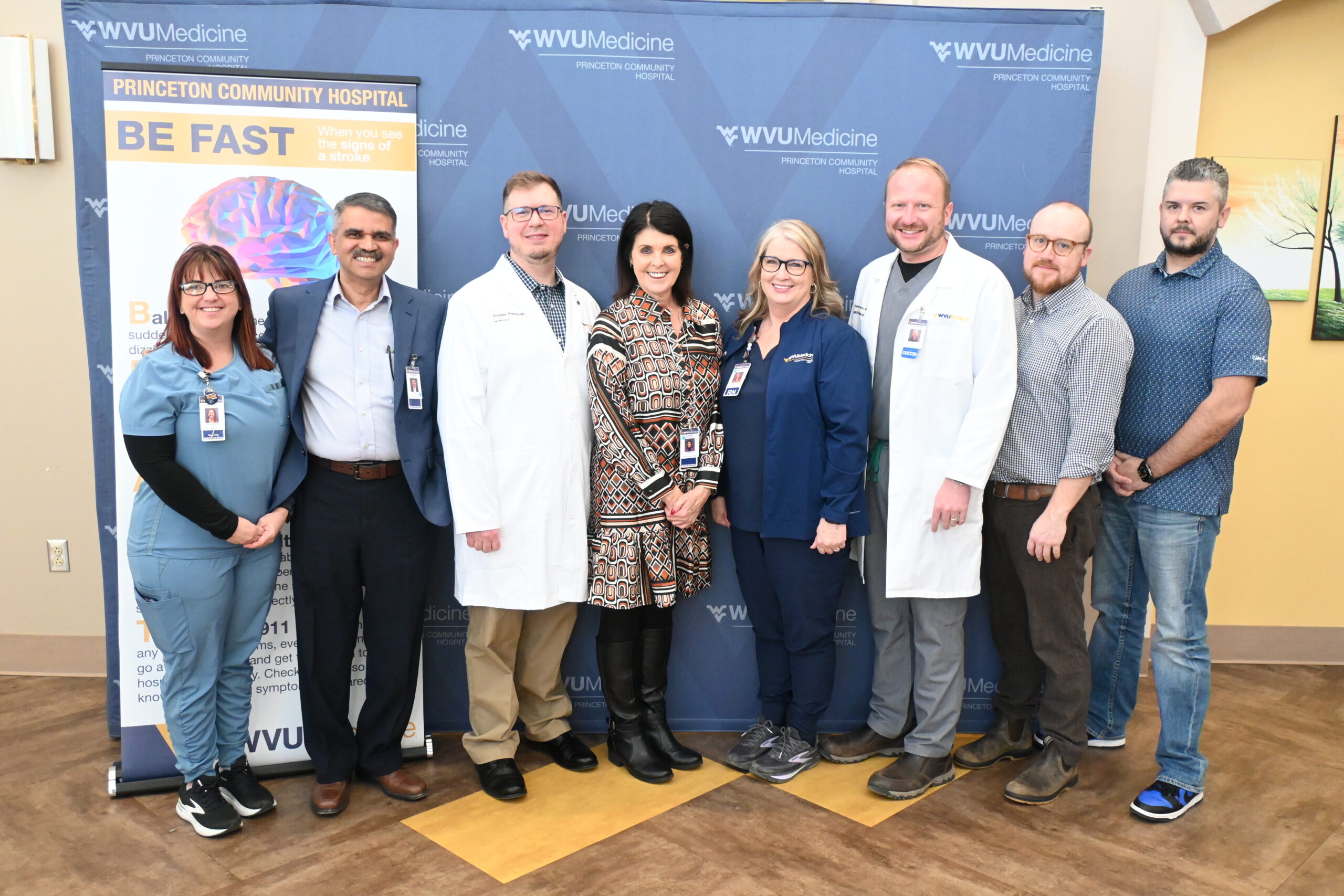
WVU Medicine Princeton Community Hospital (PCH) has achieved accreditation as a Primary Stroke Center by DNV, marking a significant milestone in stroke care for the region. This designation confirms that PCH meets rigorous standards for the diagnosis, treatment and management of stroke patients, ensuring better outcomes for the communities the hospital serves.
What This Means for Patients
As a Primary Stroke Center, PCH is equipped to receive and treat any stroke patient. PCH’s team can rapidly evaluate, initiate treatment and commence needed rehabilitation for recovery. This accreditation demonstrates that PCH provides evidence-based care aligned with American Heart Association (AHA) and American Stroke Association (ASA) guidelines.
Key Elements of Accreditation
To earn this designation, PCH underwent a vigorous evaluation of its stroke program, including data on patient outcomes. On average, in the first three quarters of 2025, PCH treated 23 stroke patients per month.
In addition, PCH has implemented comprehensive stroke protocols, including:
- Specialized Training: All nurses caring for stroke patients are NIH Stroke Scale certified.
- Ongoing Education: Physicians and emergency department staff complete at least eight hours of stroke education annually.
- Rapid Response: The stroke team works closely with EMS to activate stroke alerts before patients arrive, ensuring immediate evaluation and imaging.
- Community Education: PCH promotes stroke awareness and provides education to emergency responders, senior-serving organizations, students and the general public.
Treatment and Care
Patients arriving at PCH with stroke symptoms are evaluated promptly and may receive thrombolytic therapy (clot-busting medication) when appropriate. Following treatment, patients are admitted for monitoring and begin rehabilitation—speech, physical and occupational therapy—within 24 hours. Many continue outpatient rehab at PCH after discharge.
Why Accreditation Matters
According to the AHA, stroke is the No. 5 killer in West Virginia, which ranks among the highest states in stroke risk factors including smoking and obesity. West Virginians are also more likely to die after having a stroke. According to the Centers for Disease Control, West Virginia’s stroke mortality rate is 19% higher than other states.
“Improving stroke response in our region is critical,” says Dr. Stephen Rohrbough, neurologist and medical director of PCH’s stroke program. “Accreditation assures patients we have the expertise and resources to deliver high-quality care. Early recognition and treatment save lives, and this designation ensures our community has access to advanced stroke care close to home.”