


Small business owners are driving West Virginia’s growing economy. A report from the West Virginia Small Business Development Center announced that small businesses make up more than 98% of all businesses in the state, employing nearly half of all employees.
For many of the entrepreneurs behind the state’s economic development, access to capital is necessary for success, and there are many resources in the Mountain State offering supportive structures to ensure entrepreneurs do not have to navigate the funding process alone.
Statewide networks—such as West Virginia Jobs Investment Trust (WVJIT) and the West Virginia Grant Resource Centers—provide tools, training and connections for small businesses and entrepreneurs, offering more options for business owners looking to scale for long-term success.
“There are opportunities for financing outside of traditional commercial lending such as community financial institutions, county economic development administrations and microloan funds,” says Courtney Lewis, a portfolio manager at WVJIT.
For entrepreneurs concerned they might not qualify for funding, pitch competitions and performance-based awards are another excellent way to secure funding, build relationships with potential funders, gain visibility and network with like-minded entrepreneurs.
With several resources available, the current funding landscape for West Virginia’s small businesses and organizations seeking financial assistance can be difficult to navigate. It is important to know where to look, understand what funding prospects a business may be eligible for and how to position a project for the right opportunity.
“While traditional grants are often more readily available to nonprofits, local governments or other eligible organizations, for-profit businesses are not excluded from all public or private financial assistance,” says Sara Payne Scarbro, co-founder of West Virginia Grant Resource Centers. “It often requires looking beyond a traditional grant and considering the broader funding ecosystem, including loans, investment, workforce programs, research and development funding and partnerships.”
Some of the biggest challenges businesses and organizations face when trying to secure grant funding include capacity, matching funds and cash flow. For a small business operating solely or with a small team, finding the time to develop a strong proposal can be tricky. Additionally, the work continues even after the award is granted.
Reimbursement-based grants or ones requiring matching funds can also be a challenge for small businesses with limited cash flow.
“Being grant-ready isn’t simply about having a good idea,” says Scarbro. “It means having the capacity, financial resources and internal systems to successfully execute the project once the funding is awarded.”
Ben Adkins, investment manager for WVJIT, recommends business owners look at their funding strategy as an ever-evolving process, as investment is often needed throughout a business’s entire life cycle, and begin planning their funding strategy as soon as possible. “Once business leaders have a premise, ideation and concept of their business or project and how their core competencies relate to that business or project, they must develop a funding strategy,” he says.
The ever-evolving landscape of funding requires businesses and organizations to be proactive rather than waiting for an opportunity to be announced. As state and federal priorities evolve and existing programs change, business owners need to understand their own priorities and always be prepared for new opportunities.
“At the Grant Centers, we closely monitor funding trends, current events and policy priorities so we can help our clients navigate those changes and make connections at the federal, state and local levels,” says Dr. Liz Vitullo, co-founder of West Virginia Grant Resource Centers.
When evaluating a growing company, the financial characteristics and business fundamentals that lenders and investors typically want to see include predictability and scalability.
“From a lender’s perspective, characteristics like consistent operating margins, low debt-to-equity ratios and dependable revenue streams can make a company reliable to lend to,” says Bryce Breeden, investment analyst at WVJIT. “From an investing perspective, characteristics like high revenue growth rates, an experienced management team, technological innovation and strong unit economics can be signs of a growth opportunity.”
Grants can be a powerful resource, but the restrictions attached to them rarely cover everything a business needs, which is why growth strategies rely on a mix of funding sources. “One investment can help unlock the other,” says Vitullo.
Public funding, grants and private investment often work together to help West Virginia businesses launch, grow and scale. Leveraging multiple sources of capital can be an important factor in a successful business strategy.
“Private investment strengthens the public funding a business can receive and vice versa,” says Lewis. “Leveraging both types means a funder’s risk is mitigated, making them more likely to lend to or invest in a business.” Lewis also suggests business owners explore grants and federal funding opportunities before pursuing debt or equity financing.
Grant funding and other financial resources benefit the broader West Virginia economy, not just the individual business or organizations receiving the funding. A business receiving funding to expand operations will usually need to hire additional employees, make purchases from other West Virginia businesses and attract customers from outside the state.
“That activity can translate into new jobs, increased local spending, additional tax revenue and stronger communities,” says Scarbro. “In industries such as tourism, agriculture or manufacturing, the impact can also extend through an entire supply chain.”
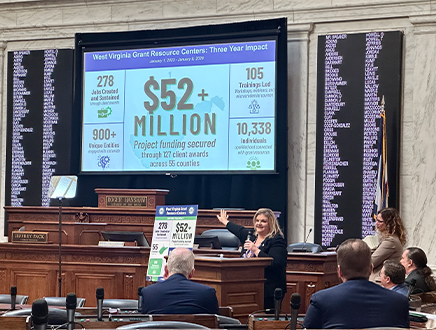
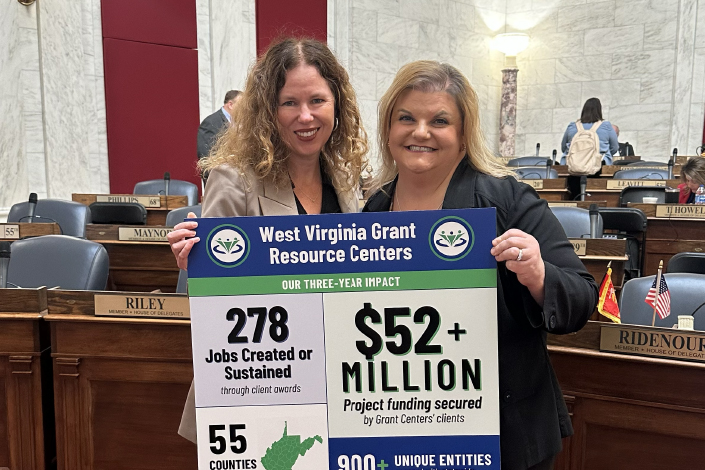
The West Virginia Grant Resource Centers is a proven example of what happens when investments and partnerships are made. Scarbro says that, with support from the Appalachian Regional Commission and the State of West Virginia, the statewide resource secured 153 funding awards totaling $58 million since operations began in 2023.
“Those numbers represent projects happening in communities—projects that can support jobs, infrastructure, workforce development, economic development and quality of life—real impact happening on the ground level,” Scarbro says. “When we increase an entity’s ability to compete for outside funding, we aren’t just helping one organization—we’re bringing new investment into West Virginia.”