

Between mountains and hills and along the Kanawha and Elk rivers lies the Kanawha Valley, the most populous region in West Virginia. From outdoor recreational activities in Nitro and new businesses inhabiting Charleston’s busy streets to unique stays outside of Clendenin, the valley is always changing. Partnerships between its cities and towns help create a happier and healthier home for its citizens and strengthen the economy through new projects and major developments.
Community
Several programs aimed at increasing community engagement and bringing entertainment to residents are in development. Many organizations and businesses are forming partnerships to support and develop these initiatives.
The Clay Center for the Arts & Sciences has partnered with Ascend WV to provide free Clay Center Family memberships to program participants in its Charleston branch.
“This partnership helps introduce a variety of entertainment and educational opportunities to new arrivals,” says Taylor Gue, director of communications at the Clay Center.
Another program to encourage community members to engage in the region’s vibrant arts and culture is underway at Arts Amplified. Executive Director Bryan Cooper says Arts Pass is a new program aiming to create a mutually beneficial cycle that will allow people to experience art and in turn grow more support for local artists and art organizations.
“Through Arts Pass, participants will be incentivized to attend performances, visit galleries, experience cultural
events and support local arts organizations, creating a fun and engaging way to discover everything the creative community offers,” he says.
Citizens of the Kanawha Valley continue to support the new businesses entering the region. Mara Boggs, president and CEO of Charleston Area Alliance, says they have hosted 29 ribbon cuttings so far this year.
“Our Small Business Incubator is at 100% occupancy for the first time in its 35-year history, with 35 tenants representing small businesses, nonprofits and government agencies, a tremendous reflection of the entrepreneurial energy in our community,” says Boggs. “That is a tremendous reflection of the entrepreneurial energy in our community.”
The Greater Kanawha Valley Foundation (TGKVF) is partnering with expert consultants from across the region to grow the TGKVF Building Bridges Leadership Institute. The new expansion includes a board development component and consultant directory, available on TGKVF’s website, providing better access for participants and nonprofits to search for consultants that algin with their needs, values and missions.
Nitro is creating more recreational activities for its residents, giving children and families a safe space to play and connect with each other. Joe Stevens, executive director of the Nitro Convention & Visitors Bureau (CVB), says the state’s largest indoor pickleball facility will be ready for the winter season at the Nitro Athletic Complex, and a new expansion of the Ridenour Lake Preserve trail system has already seen major use from the community.
Tracy Toler, owner of Adventure Trail Systems, says the 21 miles of trails are seeing close to 100 people a week since they opened over the summer.
“The trails impact the health of the community by offering a safe space to get outside and walk, bike or run in nature a bit,” says Toler, who is also a resident of Nitro. “We are super lucky because the entire trail system is within city limits. A lot of people who come to visit are going to grab a bite or drink after.”
Housing
Last fall, Ascend WV expanded its development into the Charleston area. Since then, the program has received 2,500 applications and welcomed 106 new residents to the area.
“Mayor Amy Goodwin has been a tremendous champion for the initiative, and our partnership with the Ascend WV program has allowed us to bring new residents and new talent into our community,” says Boggs.
As these recent developments and new job opportunities continue to grow, so does the need for housing. Josh McGrath, CEO, founder and broker at Better Homes and Gardens Real Estate, says this barrier is being addressed.
“We have been very successful in finding projects for investors that have been able to pick up and renovate, resell and create new housing in West Virginia,” says McGrath.
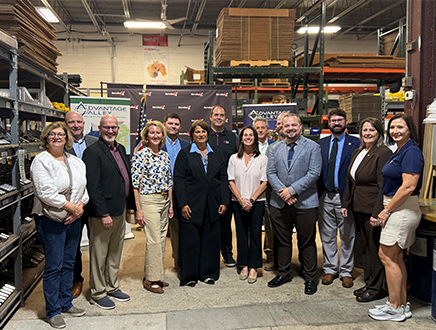
Advantage Valley has created a regional housing task force focused on developing practical solutions to increase housing production. Terrell Ellis, president and CEO of Advantage Valley Inc., says the task force has four key priorities: to expand the workforce and create more affordable and senior rental housing; increase housing options across the market spectrum; rehabilitate aging and substandard housing units and align infrastructure, land use, incentives and public and private partnerships.
Education
Education initiatives are also happening in the Kanawha Valley as organizations and higher education institutions develop partnerships to address new workforce pipelines.
BridgeValley Community and Technical College (CTC) received a nearly $2 million Appalachian Regional Commission POWER grant, hoping to strengthen advanced manufacturing education in 11 West Virginia counties.
“Our FAME Advanced Manufacturing Technician program takes another approach,” says Cody Tomblin, director of strategic initiatives at BridgeValley CTC. “Through West Virginia’s only FAME chapter, BridgeValley works with manufacturers, including Toyota Motor Manufacturing West Virginia, Nucor Steel West Virginia, Niterra North America, ProLift Toyota Material Handling and others, to prepare advanced manufacturing technicians.”
Recently, West Virginia State University (WVSU) received reaffirmation of accreditation from its accrediting organization, the Higher Learning Commission, making them the longest accredited public institution of higher education in West Virginia.
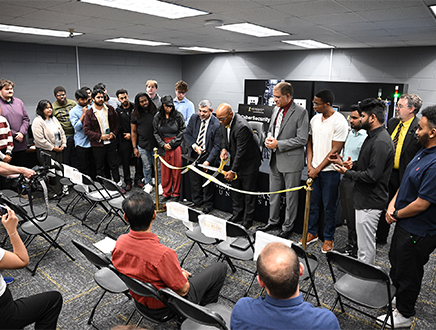
“WVSU has several important partnerships that allow us to better serve our students and meet the needs of our state and region. One particularly exciting one is with Google that allowed us to establish the WVSU Cybersecurity Clinic, the first clinic of its type in West Virginia,” says Jack Bailey, assistant vice president for communication and marketing at WVSU. “The university received $1 million in grant funding and wraparound support from Google’s Cybersecurity Clinics Fund in 2024 to establish the WVSU Cybersecurity Clinic.”
The University of Charleston (UC) has been named the best college in West Virginia by Niche for the second year in a row, and is focusing on building new programs and connecting students to the surrounding area.
“We just launched our UC Adventure Guide, inspired by West Virginia tourism and all the things the state has to offer,” says CJ Harvey, vice president of marketing and communications at UC. “We want to get students off campus and explore everything that’s happening around Charleston and throughout West Virginia.”
Health Care
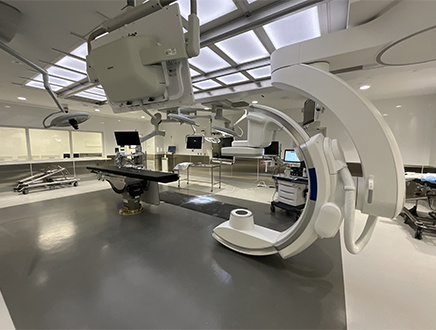
WVU Medicine is continuing health care development in the region with a $13 million capital investment for Thomas Hospitals that will improve technology, provide more specialty services and expand opportunities for patients to receive care closer to home.
“These investments provide Thomas Hospitals with access to the resources, physicians, technology and expertise of a larger academic health system while allowing the hospital to invest directly in Southern West Virginia,” says Kristin Anderson, vice president of marketing and philanthropy at WVU Medicine Hospitals.
Part of the funding includes an $8.7 million project to create a 14-bed surgical intensive care unit and a $4 million project to relocate and upgrade nuclear medicine services. The expansion will include replacement of two imaging cameras and increase critical care capacity to 41 beds at the Thomas Memorial Hospital campus.
In partnership with WVU Rockefeller Neuroscience, Thomas Hospitals Foundation invested in student-athlete safety with a donation of new Riddel Axiom football helmets, designed with advanced protection technologies, to South Charleston High School.
More accessible health initiatives are also taking place in the Kanawha Valley.
According to Dr. Steve Eschenauer, health officer for the Kanawha County and Fayette County health departments, says recently, the Kanawha County Health Department has partnered with AARP for the Walk with a Doc initiative.
“On the first Wednesday of every month at the Capitol, we are having Walk with a Doc to not only encourage
residents to be informed and educated but also to spur people, especially our elderly crowd, to get out and be active,” Eschenauer says.
With two new projects underway—the construction of the Vandalia Health Elliot Neuroscience Institute and the expansion of Vandalia Health CAMC Teays Valley Hospital—Vandalia Health is continuing to expand throughout the Kanawha Valley.
“Vandalia Health continues to build new hospitals and expand our outpatient and telemedicine services to increase access to quality care, which is critical to having a healthy population and economic growth,” says Elizabeth Pellegrin, vice president and chief marketing officer at Vandalia Health.
Economic Development
Several developments are happening in the Kanawha Valley that benefit the community, bringing jobs and fresh opportunities to the region.
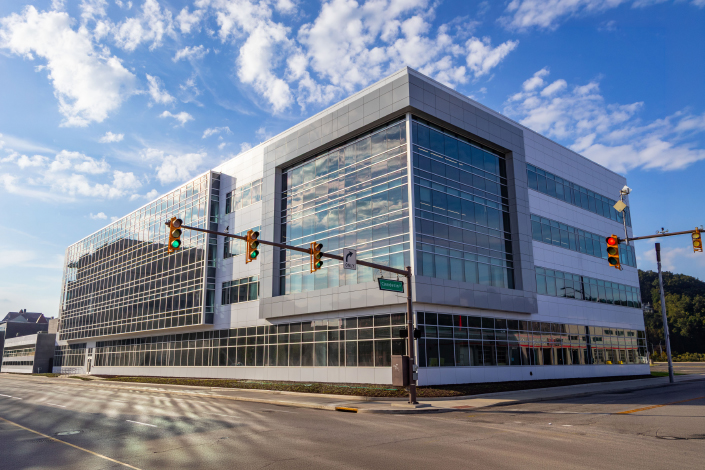
The state is investing a significant amount in a new consolidated laboratory project for a facility located on a site in the West Virginia Regional Technology Park in South Charleston. The lab will serve as a location for many services provided by the West Virginia Department of Health, training spaces for West Virginia University (WVU) and Marshall University and many more partnerships that are underway.
“The growth we’re seeing in advanced manufacturing, research, technology and related fields can create opportunities well beyond the individual projects themselves—particularly for our workforce, small businesses and communities throughout the valley,” says Matthew Ballard, CEO and executive director of West Virginia Regional Technology Park.
ZMM Architects & Engineers and Remington Charleston Corporation recently teamed up on a large-scale project in downtown Charleston, soon to be home of TC Energy.
“ZMM is nearing completion on the exterior of the building, the core and the shell,” says Adam Krason, principal architect at ZMM. “Another team is coming in to complete the interior build-out of the facility, but all those employees should be downtown soon.”
With more than 700 employees in West Virginia, TC Energy will continue to be a successful community partner and top employer of the Mountain State.
“By becoming the primary tenant in a new building on Kanawha Boulevard in downtown Charleston, we continue to invest in our people, in West Virginia and in the infrastructure that helps move Appalachian natural gas to growing markets across the country,” says Roman Stauffer, U.S. external relations for TC Energy.
City infrastructure developments are happening as well. A street and decorative lighting project is being developed in Elk City by the Westside Gateway Lighting Project, improving visibility for residents and visitors, and the Capitol Market has a new solar project in development to keep the market more energy efficient and preserve the history of the building.
Solar projects are ongoing in other parts of the Kanawha Valley as well, as a new solar and energy storage project makes its way to Kanawha County. Owned and operated by MN8, the project is expected to generate approximately $4 million in property tax revenue for the county and local schools over the first 20 years of operations, explains Tom Heywood, partner and business development director of Bowles Rice, LLP.
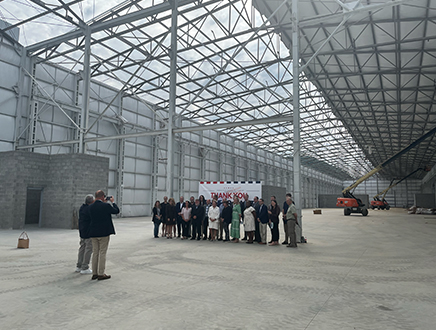
More developments are bringing jobs to the Kanawha Valley, including the LIFT Center.
“One of our biggest priorities right now is the LIFT Center, our $20 million redevelopment of the former Kanawha Manufacturing site on Charleston’s East End,” says Boggs. The primary focus for the facility is securing a tenant that can create several hundred jobs for the area.
United Bank recently opened its largest single office of any United Bank location in Charleston.
“We continue to add jobs back here in Charleston, and that’s something that, as a Charlestonian, is incredibly important to me,” says Matthew Bond, market president of United Bank. “It’s very exciting when you hear about some of the other things that we’ve gone through recently, not as United but just as an overall community to be able to add jobs.”
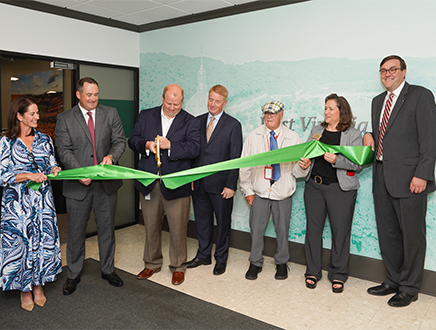
South Charleston’s Park Place continues to welcome new businesses to its shopping center, including Kroger Marketplace, Pizzas and Cream, 7 Brew and more.
“This growth adds another destination for shopping and dining while complementing what we already have in South Charleston,” says Amanda Ream, executive director of the South Charleston CVB. “We want people to experience the new development while also discovering our established businesses and our downtown area.”
Tourism
Exciting new initiatives in tourism are increasing the visitor count in the Kanawha Valley.
“We’ve been seeing a lot of really interesting data on the number of tourists we’re having in the area,” says Gue. “A lot of people travel for the performances, shows, artists and exhibits at the Clay Center, including tourists from Canada, England, France and Australia, as well as people from 47 out of 50 states.”
A few miles outside Clendenin, the Corton Lodge, a unique vacation rental and event venue for weddings, celebrations and corporate gatherings, has been seeing an influx of out-of-state visitors since the lodge began welcoming guests in 2025.
“One of the most encouraging things we have seen at Corton Lodge is where our guests are coming from,” says lodge owner Ryan Stamm. “Approximately 80% of our guests are from outside West Virginia.”
The lodge has plans to expand for an open-air pavilion overlooking the Elk River, designed to accommodate approximately 150 guests, and develop the riverwalk and outdoor recreation areas.
“A visitor can spend the day hiking, fishing or relaxing along the Elk River and still enjoy the restaurants, entertainment and cultural attractions of Charleston. Our goal is to give visitors a reason to not only stay in the Kanawha Valley but to also spend several days experiencing it,” says Stamm.
Throughout the year, the Capitol Market in downtown Charleston hosts several events, has partnership programs and provides a place to shop for fresh produce and dine at restaurants.
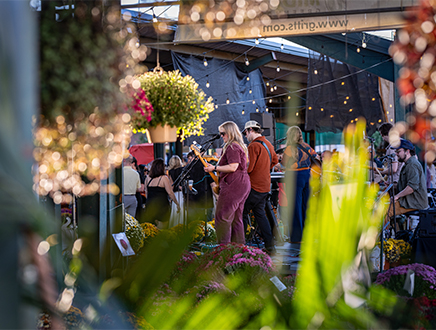
“There’s a real momentum around making Charleston and the Kanawha Valley a place where people want to live, visit, start businesses and build community,” says Nelson. “It’s great to see more people and organizations invest in the region not just as a place to work, but as a place to create experiences and connections.”
Kanawha Valley Tourism (KVT) is on track to debut several marketing campaigns with a goal of attracting tourists in the upcoming year.
“We are still ironing out some details, but we are working closely with municipalities to highlight the hidden gems and attractions of the community,” says LeFlore Barbour Lucas, executive director of KVT.
KVT partnered with the Charleston Area Alliance, Kanawha County Commission, Smith WVU Outdoor Economic Development Collaborative, Civil & Environmental Consultants (CEC) and Mammoth Preserve to facilitate “Open for Adventure: Upper Kanawha Valley Outdoor Economy Day,” held in September of this year at the Belle Town Hall.
“Its focus was to bring valuable information and tools to businesses across the Upper Kanawha Valley, specifically those in the outdoor recreation industry,” Lucas says.
The South Charleston farmer’s market has also been a great vendor for popular weekend events such as the World Market, Almost Heaven Pickle Fest and Apple Fest, attracting visitors from outside South Charleston and giving them the chance to discover the community.
“Visitors may come for an event, but while they are here, they have an opportunity to visit a local restaurant, shop at a small business, explore downtown or discover another attraction,” says Ream. “That is exactly the kind of community tourism we want to encourage—creating experiences that bring people to South Charleston and then inviting them to stay, explore and come back again.”