

By Ava Kaiser
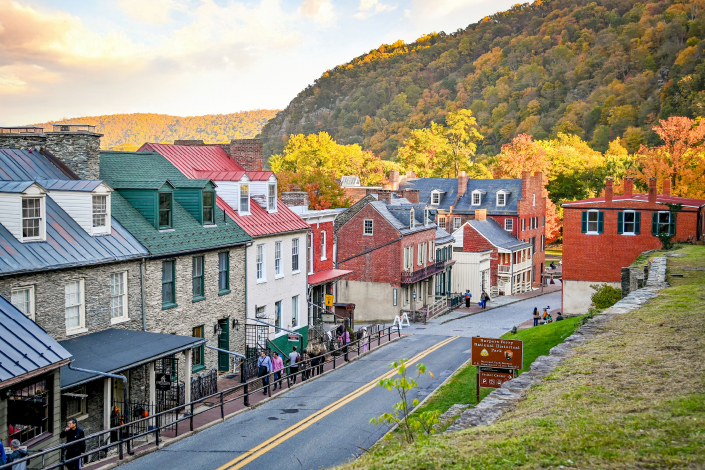
Every official roadway welcome sign in West Virginia reads, “Almost Heaven – West Virginia – Wild and Wonderful,” letting travelers know they have made it to the Mountain State, whether they are coming back home or visiting for the first time.
The slogan speaks for itself: beautiful backroads lead to coveted views of the Appalachian Mountains, cascading waterfalls are found hidden amongst many trails, ATV riding can take travelers to the state’s iconic Almost Heaven swings and the New River Gorge National Park is renowned for many outdoor recreational activities. A 2025 report from the West Virginia Department of Tourism stated that the tourism industry surpassed a $9 billion record in annual tourism economic impact that year, with nearly 7% of all jobs in the state being tourism-supported.
While tourism focuses on visitors and destination attractions, hospitality occurs when the tourists get here. Trail systems and marketing campaigns can only go so far without the people providing exceptional service and experiences that satisfy visitors and keep them staying another day. While many people use the terms tourism, hospitality and outdoor recreation interchangeably, it is important to distinguish the three when developing economic strategies. The outdoor economy is the ecosystem that includes tourism, hospitality and outdoor recreation, but it is also the business, infrastructure, conservation, manufacturing and workforce that makes these experiences possible.
Education & Workforce
Outdoor economy is an expansive and growing industry that requires a large and diverse workforce to support tourism, hospitality and outdoor recreation.
West Virginia has many programs supporting education and workforce development in these areas. Natures Mountain Classroom—an opportunity for local students in Pocahontas County to experience the same outdoor activities that draw visitors in their hometown—is shaping the way young Mountaineers see the tourism industry as a unique and attainable career path.
Another workforce development program is the Nemacolin Hospitality Innovation and Leadership Lab, created to bridge the gap between education, hospitality and the tourism industry.
Dr. Meridith Balas, director of the Nemacolin Hospitality Innovation and Leadership Lab at West Virginia University (WVU), says educational programs like these provide exposure to industry standards and connect students with industry leaders.
“The lab develops the professional competencies that are often learned only after entering the workforce—executive communication, leadership, relationship building, business etiquette, understanding industry trends and the confidence to engage with professionals at every level of an organization,” says Balas.
Industry Partners
Tourism leaders are privy to visitor and destination marketing; economic development organizations identify business growth, capital and investment opportunities; and the leaders of higher education contribute to research and workforce development. With these perspectives together, navigating the outdoor economy can be easier and more impactful than doing it alone.
“This year’s West Virginia Outdoor Economy Summit showed just how ready the state is for collaboration,” says Heidi Prior, outdoor business development coordinator for the Smith Outdoor Economic Development Collaborative at WVU. “More than 325 people attended, and it succeeded because people have been asking for a place to have this larger conversation and because so many partners were willing to help build it.”
The partnership between WVU and the Nemacolin Hospitality Lab has resulted in a 100% placement rate after graduation, a result Balas says is due to internships students are able to complete before graduation.
“Employers recognize the value of that preparation,” she says.
Students can gain not only exposure to industry standards but also connect and collaborate with leaders across the tourism and hospitality industry.
New programs such as the New River Gorge Regional Development Authority’s PATTERN are creating a space for gear design, testing and manufacturing. This way, tourists will not only participate in outdoor recreation, but they will also be able to purchase gear produced here.
“PATTERN combines industrial sewing training with product development, prototyping and small-batch production to help entrepreneurs take an outdoor-product idea from concept to something made right here in West Virginia,” says Prior.
Attracting Tourists & Advancing Local Communities
When a state invests in tourism to attract new visitors, it creates a ripple effect that benefits the local communities. Although investing in communities to support outdoor recreation is not a band-aid for West Virginia’s quality of life, it does bring value to the people who already live here.
Working in the industry for the past 20 years, Prior has witnessed the positive economic change the tourism industry has brought to shrinking communities. Although the growth has attracted new businesses, residents and investments, the growth also brings challenges like housing, affordability and displacement.
“A trail alone will not save a town. It must be connected to health care, housing, broadband, downtown development, business support and local ownership,” says Prior. “The goal should never be a successful attraction surrounded by a struggling community. The investment should make the entire community healthier and stronger.”
Some investments have already seen a return in attracting visitors and new residents. Buddy Butler, partner to Nikki Butler Design, explains how the marketing budget for the West Virginia Tourism Department and its national media campaign has reintroduced West Virginia to the rest of the world.
“The best move the tourism office made was bringing back the ‘Almost Heaven’ brand and using ‘Take Me Home, County Roads’ again in its campaign,” he says. “The brand value of ‘Take Me Home, County Roads’ is huge as the song is recognized all over the world.”
West Virginia has an advantage in investment opportunities because of the resources that are already available. The state is home to the highest density of rivers, most developed rock climbing in the Eastern U.S., hunting and fishing capabilities and accessible trails, changing the way West Virginia competes for opportunities and talent.
Brad Smith, co-founder of Ascend WV and president of Marshall University, says this change can be seen in the partnerships it has created.
“Ascend WV has demonstrated that when you combine those natural assets with strong broadband, entrepreneurial support, educational opportunities and vibrant local communities, West Virginia becomes a destination for innovators, professionals and business leaders,” he says.
Emerging Technology & Trends
Tools such as data analytics and AI are changing hospitality and tourism in West Virginia. One of the biggest changes is the way tourists are discovering new destinations.
“More travelers are using tools like ChatGPT to research destinations, build itineraries and decide where to stay,” says Balas. “Three out of every four travelers are now using generative AI to plan their trips.”
This means destinations are now having to strategize outside of using traditional tools such as search engine optimization and instead ensure their websites, content and digital presence are structured in a way generative AI tools can recognize them as credible and relevant sources.
Mountaineering, extreme mountain biking, trail riding and water sports have traditionally dominated the outdoor recreation industry, but a report by the Outdoor Industry Association shows that casual and active lifestyle participants drive more than 90% of the outdoor consumer market—adding more than 2 million hiking, camping and fishing participants to its report.
“These soft activities are not secondary,” says Prior. “They are the gateway to participation and, in many ways, the economic base of the industry.”
The Outdoor Economy in 2036
West Virginia is capable of not only becoming a top tourist destination, but by contributing to communities, bringing in new jobs, businesses and overall high-quality of living, it could be a top place to build a life.
Driving through rural communities could look like young people utilizing outdoor spaces, locally owned stores and restaurants filled with locals and tourists, and more visitors using products manufactured in the state, along with stronger schools, clear career pathways and a new feeling of choice to stay home.
“West Virginia could also have permanent statewide leadership for outdoor recreation, with dedicated capacity and funding, as well as a strong outdoor business alliance connecting, supporting and representing the businesses that form the backbone of the sector,” says Prior.
Success could be measured not only by visitor spending but through new businesses, local ownership, health outcomes, population trends and the amount of wealth funneling into the communities.
Tourism In West Virginia By The Numbers
$9 billion total economic impact
$1.1 billion in tax revenue
1 in 15 of all jobs in the state
For every $1 spent on museums, historical sites, zoos and parks, $0.78 in spending is created through indirect and induced effects
State parks alone generated over
$40.9 million in revenue from 2015-2024
37k students enrolled in tourism courses since 2023
For every $1 spent on hotels and motels, $0.51 in spending is created through indirect and induced effects
Sources:
- Bureau of Labor Statistics
- IMPLAN 2024 Model Year for West Virginia Region
- Intelligence
- WVDT Tourism Economics
Outdoor Economy In West Virginia By The Numbers
82,000 direct state jobs
$2 billion in wages and salaries
Supports 21,936 jobs and $1.0 billion in wages and compensation across the state
3% of employment statewide
Consumers spend $7.6 billion annually on outdoor recreation
Outdoor recreation added 2.1% to the state’s GDP in 2024
Sources:
- Bureau of Labor Statistics
- IMPLAN 2024 Model Year for West Virginia Region
- State of West Virginia ACFR, 2025
- U.S. Bureau of Economic Analysis