
Education is expanding in the Mountain State but not just in traditional classroom or collegiate settings. Programs offering unique methods of learning are giving West Virginians of different ages, backgrounds and skill sets the opportunity to learn in ways that are fun, interactive and best suit their goals.
Online schooling is growing in popularity, and the West Virginia Virtual Academy (WVVA), a tuition-free K-12 program, offers an engaging, effective option for remote learners that is staffed by state-certified teachers.
To support online success, the WVVA provides a recommended supplies list, technical and customer support and requires students to log in between five and six hours daily with a learning coach to guide and engage them in the curriculum. Students in good standing may also take part in the Flex program, allowing greater independence and flexibility.
Though online, the WVVA has many options that help prepare for the future. Students gain access to career and technical education from the time they are in sixth grade and can begin earning certifications in ninth grade. They can also participate in the TechBridge program, which allows them to continue their online learning while also attending a local tech center in person. For those wanting to earn college credit, the academy offers dual-credit courses.
“These offerings reflect the WVVA’s commitment to career and college readiness, integrating industry-aligned pathways and academic rigor,” says Doug Cipoletti, executive director of the WVVA.
The WVVA supports student well-being through a partnership with the Cook Center for Human Connection, offering counseling, parenting sessions and a Q&A therapist forum. To keep students socially connected, the WVVA provides online options like a virtual hangout zone and in-person events, including prom, graduation, field trips and clubs.
“The comprehensive counseling program includes personal and group counseling, career exploration, study skills instruction, parent outreach, academic advising and postsecondary planning, ensuring students’ emotional, social and personal growth are addressed alongside academics,” Cipoletti says.
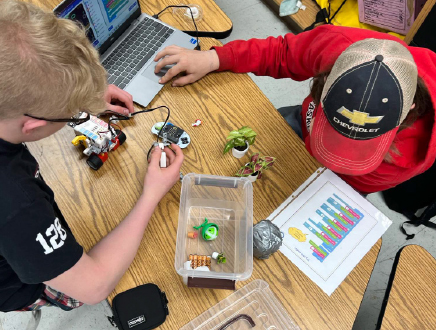
At the West Virginia STEAM Technical Assistance Center (STEAM TAC), classroom immersions are integrating real-world challenges into schools across the state that educate students and teachers on what STEAM can do.
These immersions, available for middle and high school students, provide transdisciplinary learning that connects academics to real-world tasks, helping students explore career paths and acquire useful skills such as critical thinking and teamwork.
“The goal of a STEAM TAC immersion is not to achieve a correct answer or outcome but rather to find multiple levels of success through application and iteration,” says Dr. Jen Robertson-Honecker, West Virginia University Extension associate professor and STEAM TAC faculty liaison.
To ensure challenges reflect the state’s needs, STEAM TAC works with industry professionals and subject matter experts to align tasks with real-world issues. The program also incorporates student feedback and observations to refine and
improve immersions.
“The chosen tasks engage students quickly, allow them to achieve success at multiple levels, encourage iteration and refinement and can be replicated by classroom teachers,” Robertson-Honecker says.
To encourage students to think about their future careers, STEAM TAC works activities into immersions that help them understand the different tasks within specific industry roles. While performing computer science or coding immersions, students may take on the role of software developer or project manager, providing an example of the different jobs one may have in a career path.
“Students are immersed in real-world environments that put them in driver software developer and navigator project manager roles throughout the activities,” Robertson-Honecker says. “Similar models are used to introduce students to a wide variety of industry roles in each of our immersions.”
After classroom immersions, teachers are left with some equipment used in the lesson as well as lesson extensions that allow them to build on the immersion further. This ensures that educators can continue promoting the important concepts taught through STEAM outside of the program.
Farms Work Wonders is also introducing young people in the state to real-world opportunities through its Junior Crew program, a paid opportunity for residents ages 16-21 who are given the chance to contribute to one of the organization’s departments.
Jason Smith, managing director at Farms Work Wonders, says youth are encouraged to explore any area they would like through Junior Crew, such as the bakery, market, glass studio or farm, until they find something they enjoy.
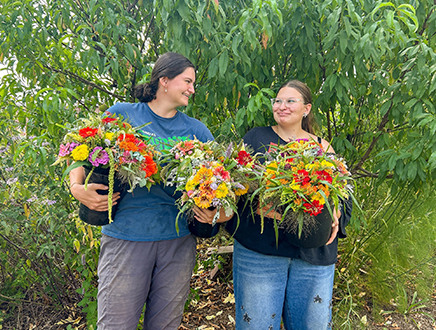
“Junior Crew members aren’t just employees—they’re part of a learning community where they discover strengths, practice professional skills and contribute to thriving social enterprises in the heart of Appalachia,” Smith says.
To prepare for Junior Crew, participants go through the Challenge Program: a few days of rotation through the different enterprises, where they earn a fresh résumé and a food handler license, that gives participants a taste of each department before they make a commitment to one.
Smith says the different departments offer unique learning experiences. The bakery helps build confidence through precision and consistency, the market promotes hospitality and responsibility and the glass studio takes youth into the world of creativity and discipline.
“Beyond the technical skills, each space helps youth experience belonging, purpose and contribution,” he says. “No matter where they land, Junior Crew members see their work as part of something bigger—helping create a thriving community where what they do really matters.”
The Junior Crew program not only provides youth with a job but an opportunity for personal growth and insight into the opportunities available to them. By encouraging them to discover new interests, the program helps guide them into a future career and prove they can make a meaningful impact while staying in Appalachia.
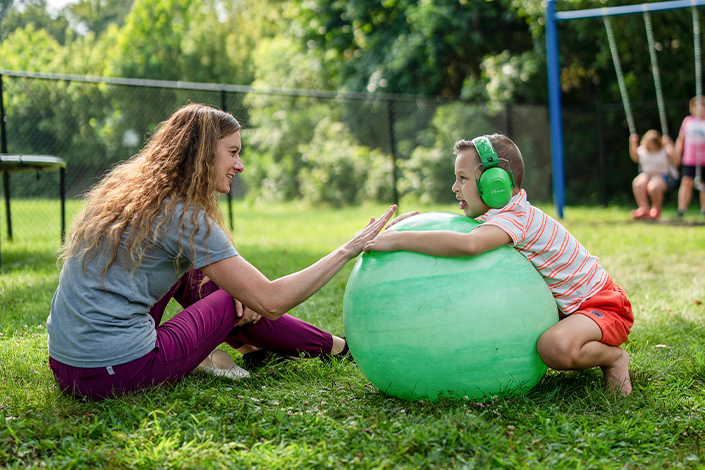
Not every child learns at the same pace, and for those with learning disabilities, it can be difficult to excel without one-on-one, specialized education. Jill Scarbro is addressing this issue through the Bright Futures Learning Services program.
Growing up with dyslexia, Scarbro relied on a strong support system that helped her succeed. Her experience working with a young boy named Mike with developmental challenges through a home-based Applied Behavior Analysis (ABA) program at Marshall University further inspired her to earn an ABA degree from the University of North Texas, helping those like herself and Mike get the support they need.
Along with supporters and parents, Scarbro built Bright Futures, providing therapy to children that addresses their educational needs. She says the program does not follow a one-size-fits-all approach, as each child is unique.
At Bright Futures, behavior analysts begin by sitting down with families to understand what their priorities are and how they can improve quality of life for families and their children. They then assess the child’s abilities and learning barriers and develop a six-month therapy plan tailored to these goals and needs, administered by a well-trained ABA professional.
Throughout the process, family is constantly engaged, and caregiver training is incorporated into each treatment plan.
“We’re committed to creating lasting change in everyday life by equipping families with the tools, strategies and confidence they need to support their child in all environments,” she says. “Through ongoing coaching, follow-up support and continuous collaboration, we ensure that progress made during sessions translates seamlessly into the home and community.”
Scarbro says success looks different for every child.
“One of our first indicators of success is seeing a happy learner: a child who feels safe, motivated and eager to participate,” she says. “From there, we focus on functional, meaningful outcomes that matter in daily life. Can the child communicate their needs effectively, whether through words, gestures or a communication device? Can they transition smoothly between activities, tolerate a haircut or handle a trip to the dentist? This is real-life success.”
Bright Futures makes an impact on each child it serves. With their best interest in mind, the program helps them overcome their challenges and build the skills and confidence they need to succeed in everyday life.
With these non-traditional education options, learning remains a priority in West Virginia, giving residents the chance to grow and pick up knowledge in whatever way works best for them.
Marshall University’s Lifelong Learning Program
 At Marshall University, the Lifelong Learning Program (LLP) is giving locals the chance to learn without the pressure of homework, exams or earning college credit. Members gather on a routine basis to listen to presenters and become educated on new topics as well as connect with other Marshall supporters.
The LLP has covered topics such as Camden Park, African American history, cooking and artificial intelligence. Oftentimes, attendees leave a presentation fascinated by a topic they never thought they would enjoy learning about.
“Frequently, there will be a topic, and I’ll say, ‘Well, I’m totally unfamiliar with that or maybe not that interested,’ but anytime you go, it sparks an interest and you learn something,” says LLP participant Roberta Ferguson on the Quicke Takes podcast.
Though the LLP program is comprised mostly of retired individuals, it is open to all who would like to join, helping keep minds active and giving those in the area an entertaining and enlightening activity to look forward to.