


For generations, West Virginia’s families have watched their state rank near the bottom in national education outcomes. According to U.S. News & World Report, West Virginia sits at 46th in pre-K-12 education, a sobering place for a state with deep community roots and fierce pride.Something is changing, though.
In 2021, the Mountain State made a bold move to rewrite its education story. With the creation of the Hope Scholarship Program—what was then and continues to be one of the most expansive education savings account (ESA) programs in the country—West Virginia signaled that it would no longer accept failure as the norm.
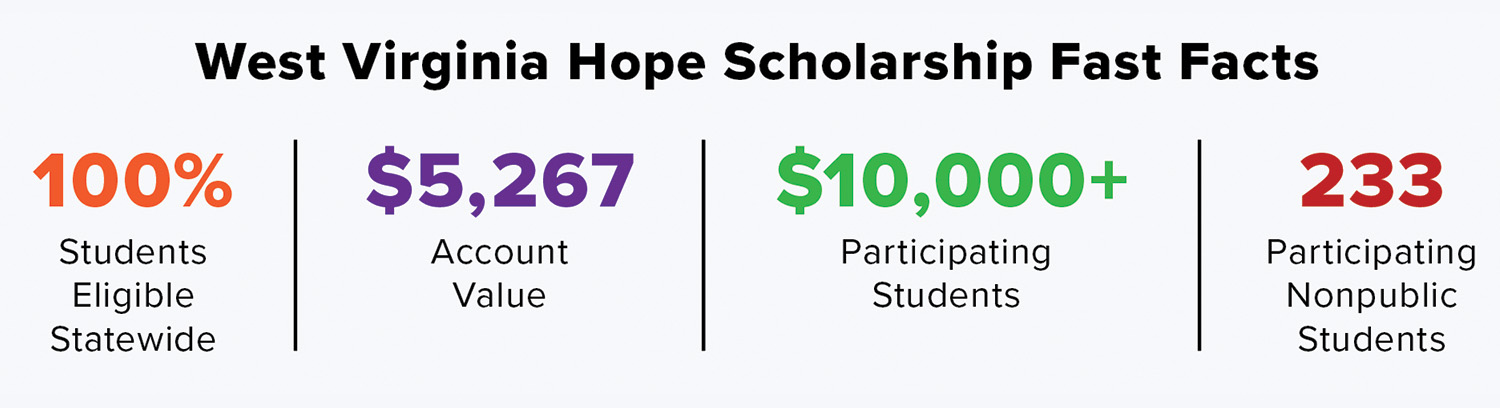
The Hope Scholarship empowers families to pursue alternative education options by directing a portion of their child’s public education funding to an eligible private school, homeschool, microschool or other approved uses the parent believes are best for their child. Participation in Hope has exploded from 2,333 students in its first year to more than 10,000 in the 2024–2025 school year. That’s nearly a 330% increase in just two years.
This rapid growth reflects more than just rising enrollment. It signals a broader transformation of how West Virginia families are choosing to educate their children.
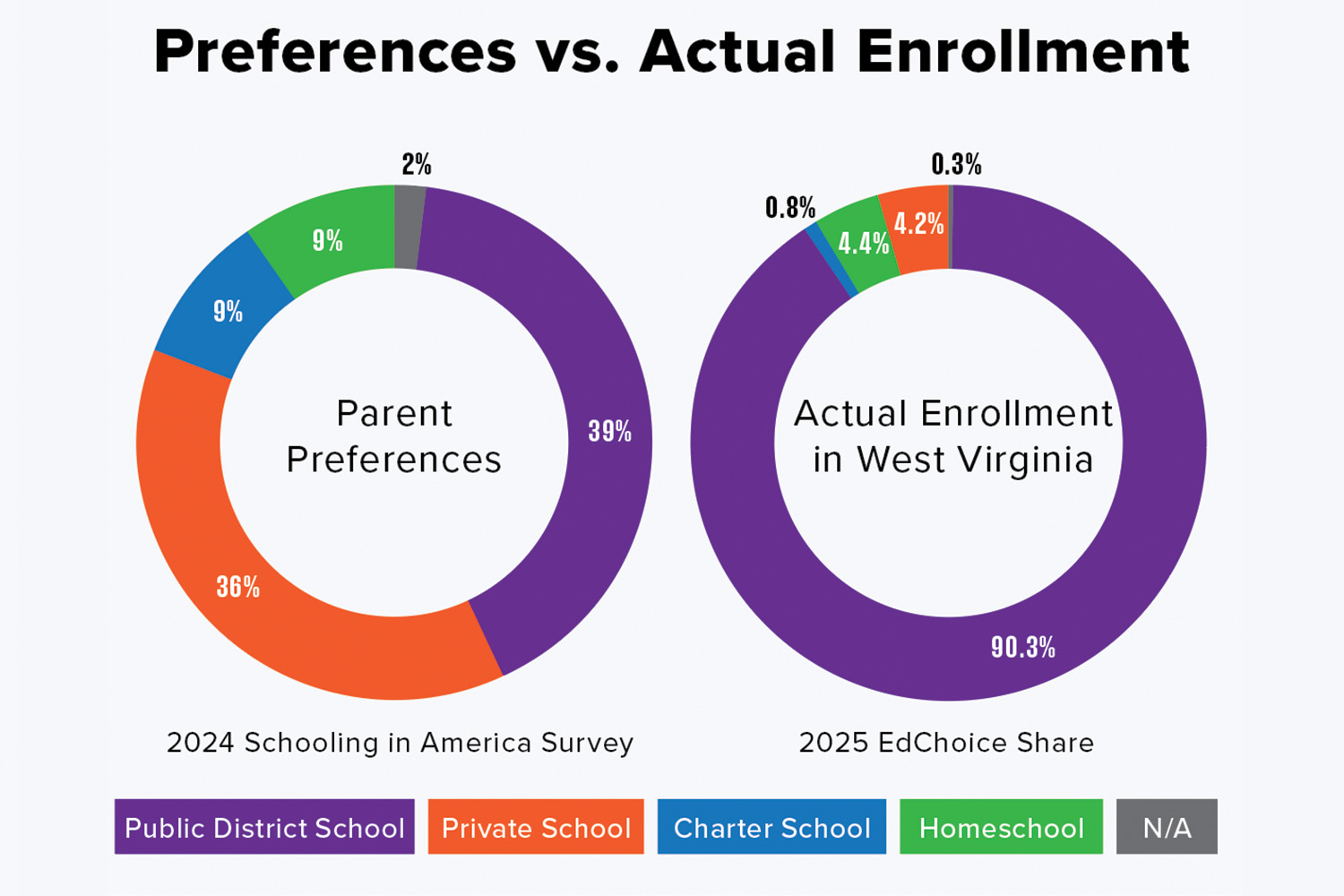
According to the 2025 EdChoice Share, which measures how much states utilize educational models beyond traditional public schooling, 4.2% of West Virginia students access a private school through a choice program, and 4.4% are homeschooled. West Virginia, a state with virtually no educational choice options just a few years ago, now ranks eighth in the country.
With more than 230 nonpublic and microschools now participating in Hope, the educational landscape in West Virginia looks drastically different than it did just five years ago, with families not only enjoying more educational freedom but more options from which to choose.
Charter schools are also beginning to take root. In 2021, lawmakers expanded the number of allowable charters from three to 10 and introduced two statewide virtual charters. Today, five brick-and-mortar charter schools and two virtual charters operate across the state, bringing flexibility and innovation to communities that have long lacked educational alternatives.
Microschools like Vandalia Community School in Charleston are just one example of how new models are meeting families where they are. Rooted in Montessori principles and outdoor, hands-on learning, Vandalia is emblematic of the personalized, community-driven education many families are seeking and now finding.
Even more encouraging, starting in fall 2026, the requirement that a student must first attend public school before accessing a Hope Scholarship will be lifted, opening the program to thousands more families from the start of their educational journey.
That’s good news for families who have long experienced a gap in what they want for their children versus what they are getting. While approximately 90% of students in West Virginia attend a traditional public school, roughly half of parents say they would choose a nonpublic option if given the chance—and policies that stand to bridge this gap are popular. Polling data collected by EdChoice and Morning Consult show that 64% of all West Virginia adults support ESAs like Hope, and that number jumps to 69% among school-aged parents.
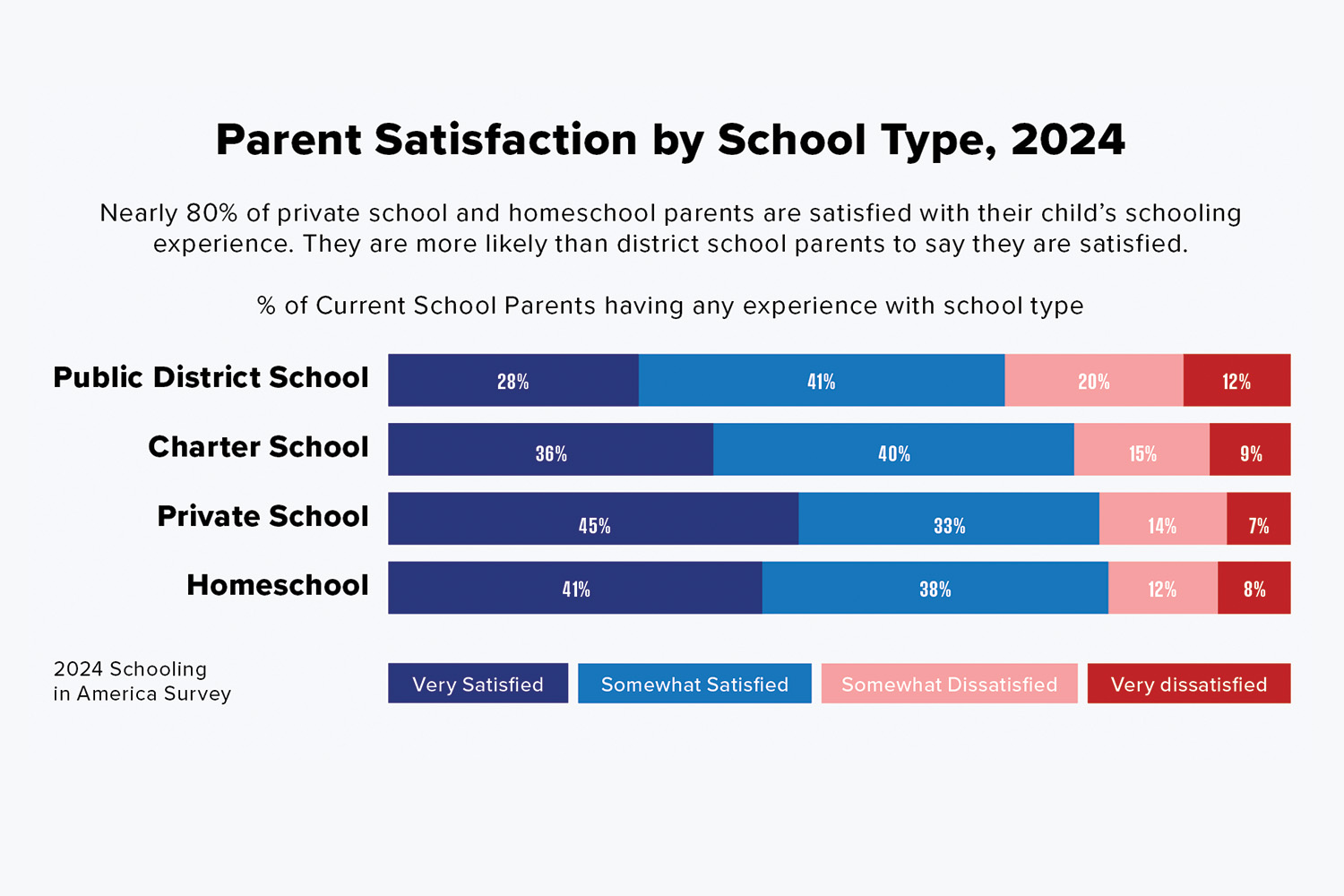
As this gap between parent preferences and actual enrollment closes, it will result in happier, more satisfied families. Parents of students in private schools and homeschools consistently report the highest satisfaction levels, with roughly 80% saying they’re pleased with their child’s learning environment.
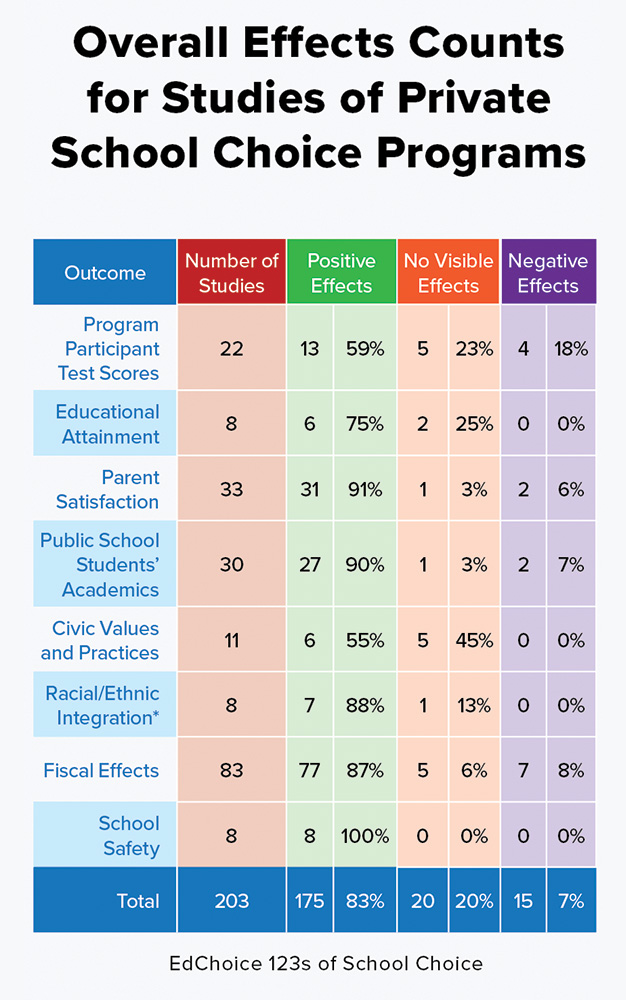
Families aren’t the only ones who experience positive outcomes—communities do too. EdChoice’s analysis of over 200 empirical studies finds that private school choice produces positive results in every area examined.
Eighty-four percent of reviewed studies found that private school choice programs have positive effects on participant outcomes, public school students’ performance, taxpayer resources, school safety and more.
Thirty-one out of 33 studies on parent satisfaction show families are more satisfied with their child’s education after accessing school choice programs. Twenty-seven of 30 studies show that competition from school choice programs leads to improved academic performance in public schools.
Perhaps most significantly, long-term studies find that students who use school choice programs are more likely to graduate from high school and enroll in college. In Florida, for example, students in the state’s scholarship program were 19% more likely to enroll in college compared to their public school peers.
That means the Hope Scholarship isn’t just offering a better learning environment for today; it’s building a stronger foundation for tomorrow. Milton Friedman, the father of the modern school choice movement, believed that giving parents the ability to choose their child’s school would force the education system to improve through competition. West Virginia is now bringing that vision to life.
It might sound ambitious, but West Virginia moving to the top of the pack in education is within reach. With more than 10,000 families already participating in Hope, more charter schools opening their doors and a flourishing microschool ecosystem, West Virginia is on track to be a national leader in school choice innovation.
This transformation isn’t just statistical, it’s deeply personal. It’s about the family who found a school that finally sees their child for who they are. It’s about the student who now feels safe enough to learn. It’s about the parent who no longer has to choose between paying bills and providing a quality education.
School choice isn’t just about options. It’s about opportunity. It’s about acknowledging one-size-fits-all doesn’t work for kids, and West Virginia’s future depends on unleashing the potential of every child, no matter their ZIP code. West Virginia’s educational journey is far from over, but for the first time in decades, it’s moving in the right direction.
*Editor’s Note: Unless otherwise noted, all statistics referenced are national; West Virginia enrollment figures are the only exception.