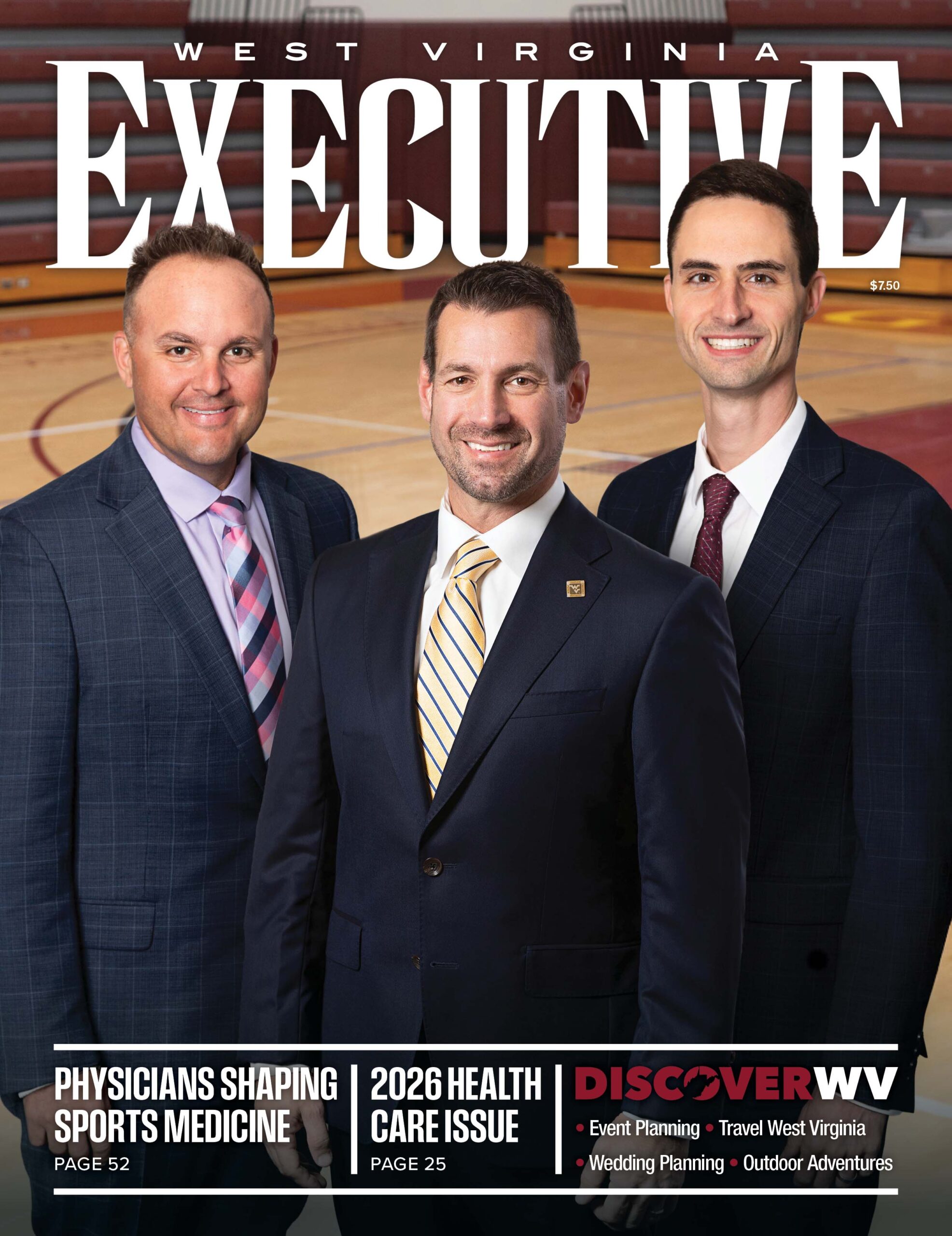



While participating in sports or living a generally active lifestyle comes with many health benefits, it also carries an increased risk of bodily injury, sometimes resulting in athletes being forced to stop doing the things they love. Medical professionals specializing in sports medicine work to guide these individuals through recovery, encourage preventative measures to decrease the likelihood of injury or strain and spearhead new techniques that promote more efficient solutions, getting their patients safely back to pursuing their passions as quickly as possible.
A.J. Monseau, M.D., grew up around sports and witnessed directly the mental and physical demands athletics can have. He now serves as professor of emergency medicine at the West Virginia University (WVU) School of Medicine and chief of both the Division of Sports Medicine and Department of Emergency Medicine at WVU Medicine J.W. Ruby Memorial Hospital. He is also the head team physician and medical director for the WVU Department of Intercollegiate Athletics. In these roles, Monseau guides patients through every step of the recovery process.
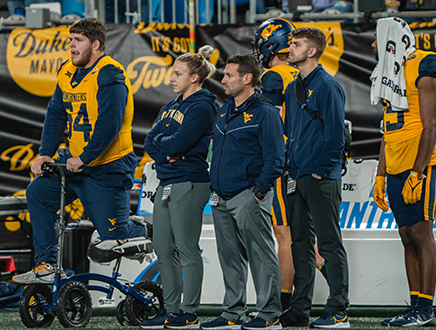
Monseau says prevention is the foundation of his practice, and a large part of his work involves instructing patients on how to avoid repeat injuries. This involves staggering athletic training to allow certain muscles to rest at different times and, for younger patients, encouraging periods of rest and recovery to ensure healthy development. He emphasizes that within WVU Athletics, strength and conditioning coaches, athletic trainers and dietitians work together to promote injury prevention.
“Ultimately, many injuries result from pushing too hard without adequate rest,” Monseau says. “Taking a progressive, deliberate approach to training helps minimize these risks and supports sustained performance.”
Monseau says in terms of advancements in sports medicine, there are biologic treatments on the horizon—forming medications made from living organisms—that evidence suggests could help speed up recovery and improve tissue healing. He also touches on the importance of the use of diagnostic ultrasound, explaining that it allows for a more dynamic look at soft tissue injuries, improved accuracy with diagnoses and tracking of the healing process and advantages when guiding procedures such as injections.
“As ultrasound becomes more widely adopted, it is significantly improving our ability to diagnose conditions earlier, treat them more effectively and track recovery with greater precision,” Monseau says.
Working closely with WVU and other Big 12 universities throughout the COVID-19 pandemic, Monseau strengthened
these professional relationships and, in 2022, was named chair of the Big 12 physician medical director group.
“This period reinforced our core mission: to advocate for student athletes as individuals first and athletes second,” Monseau says. “While college sports have continued to evolve, our role as physicians remains centered on protecting the health and well-being of our student athletes.”
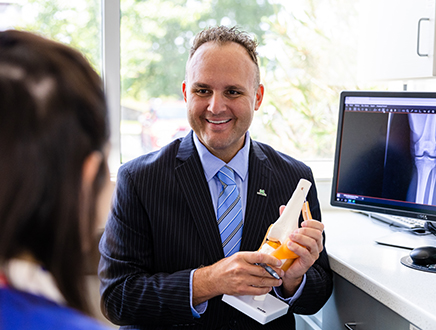
Chad Lavender, M.D., assistant professor of orthopaedic surgery at the Marshall University Joan C. Edwards School of Medicine and orthopaedic surgeon at Marshall Health Network, was inspired to pursue sports medicine because of his passion for helping athletes safely return to the sports they love as well as the practice’s diversity of injuries and constantly evolving practices.
Lavender pioneered the fertilized ACL technique, which uses bone marrow concentrate, autograft bone and demineralized bone matrix for reconstruction. The technique uses biologics and an internal brace to help heal the grafts in the bone, prevent cysts from forming and advance rehabilitation. Lavender has also begun an arthroscopy trial for a Nano Needle, which, by using a smaller scope, will help reduce the use of strong pain relievers by patients after surgery.
“We have changed the graft we use to a quad tendon graft. Also, the internal brace now comes preassembled to our implants, which makes it more reproducible,” Lavender says. “I believe in the future surgeons will continue to augment their ACLs to enhance recovery. How they choose to augment and what biologics they use may change.”
ACL injuries are some of the most common among athletes, and Lavender’s fertilized ACL technique has resulted in shorter recovery times and improved outcomes and function for patients.
“Since developing our fertilized ACL technique seven years ago, we continue to see improved outcomes and function,” Lavender says. “Historically, reinjury rates have been in the range of 6 to 11%, and our most recent study shows only 3% and 2- to 6-year follow-up.”
Lavender says throughout his career and the development of the fertilized ACL technique, the most rewarding aspect has been helping younger patients who go on to succeed and make their own contributions to their athletic communities.
“Seeing and hearing from patients not just from West Virginia but from all over the world who have had the procedure really is a special aspect our state can be proud of,” he says.
Driven by a passion for helping his patients achieve an active, healthy lifestyle, Vincent Morra, D.O., family medicine doctor at CAMC Orthopedics, serves patients of all ages and backgrounds in a range of treatment options.
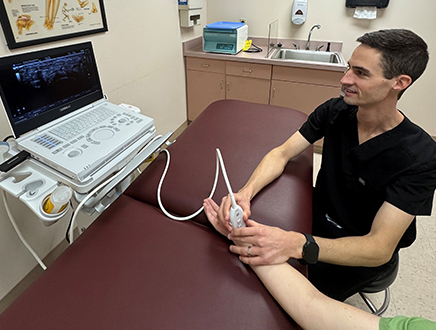
“Personally, I love living an active lifestyle,” Morra says. “I enjoy running, biking, hiking and playing pickleball. I know when I have personally had injuries in the past, I wanted to get back to activity as soon as possible but in a safe manner. I am grateful for the opportunity to guide patients back to their desired levels of activity and promote their health, well-being and active lifestyle.”
Morra says physical activity itself can help prevent bodily injury so long as it is done in the proper manner. He encourages patients of all ages to engage in proper weight training and cardiovascular exercises, which minimize the loss of muscle mass. Due to the relation between structure and function, Morra also performs osteopathic manipulative treatment to encourage musculoskeletal alignment.
One method Morra uses to treat musculoskeletal injuries and conditions is platelet-rich plasma (PRP), a treatment in which the physician collects a blood sample from the patient that is then spun down a centrifuge. Platelets and other growth factors are then collected, separated and injected into the patient’s infected tissue.
“PRP stimulates inflammation of the affected tissues and encourages cellular proliferation, thereby promoting stability and accelerating function of the damaged region,” Morra says. “Many patients are drawn to this form of regenerative medicine because it assists the body in naturally treating the source of the issue.”
The use of PRP has become more popular over the past few decades not only because of its ability to naturally heal the infected tissue as opposed to treatments such as steroid injections but also because of its improved patient outcomes. Morra says that since he has begun administering PRP in his practice, he has seen great success with patients reaching their desired activity levels and completion of rehabilitation protocol.
“Examples include athletes with hamstring tears, UCL sprains and knee traumas who have returned to sports quicker and more confidently,” Morra says. “We have also seen patients with knee, shoulder and hip osteoarthritis who have had considerable improvements in joint pain after PRP.”
With new advancements like this in sports medicine, more people are encouraged to live a more active lifestyle, athletes are less likely to be forced to stop competing for prolonged periods of time and physicians can guide their patients more efficiently through the procedure and recovery process. Each time an athlete steps onto a court or field, a sports medicine doctor is there, ensuring they can thrive in doing what they love.