

Across the U.S., mental health challenges are on the rise, and West Virginia is no exception. However, the Mountain State is home to a growing range of mental health services that go beyond traditional talk therapy. From brush strokes in an art studio to the companionship of a horse, residents of West Virginia are finding new ways to achieve mental wellness.
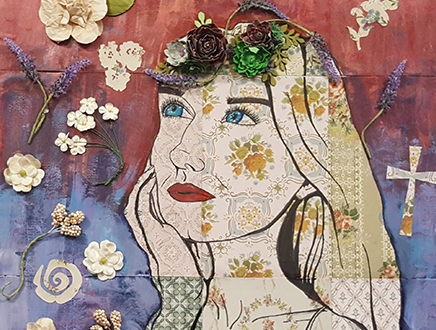
“Talk therapy is a powerful tool in helping people address personal, professional and life challenges, but art therapy utilizes both talk therapy and visual language,” says Dr. Susan Ridley, associate professor and chair of the Art Therapy and Counseling Department at West Liberty University (WLU). “When traumatic experiences occur or if the person does not have the verbal skills to talk about what has happened to them, art therapy provides a bridge for communication.”
Through painting, music, dance, journaling and other creative endeavors, art therapy taps into the unconscious mind to uncover and process complex emotions safely. Techniques such as visual journaling with reflective writing or creating paintings help individuals regulate emotions, express themselves and build self-esteem.
Throughout her career, Ridley has seen art therapy transform lives at all ages. Anything regarding creative play works well with children, but for older adults suffering from cognitive decline, sometimes activities that encourage them to reminisce on the past help them remember things more easily.
“In my work with older adults with Alzheimer’s disease and dementia, music is the primary tool I’ve used since it is the last thing that is forgotten,” Ridley says. “Respect for age and experience is paramount when working with older adults in cognitive decline as activities need to be simplified and steps to completion reduced to minimize frustrations about lost memories.”
WLU was the first university in West Virginia to create both an undergraduate Creative Arts Therapy program and a graduate Art Therapy and Counseling program. WLU supports credentialed art therapists statewide through these programs. Both are designed to meet growing mental health needs and include virtual options, professional memberships and liability coverage for students. The graduate program also has an art therapy scholarship, which includes a two-year membership in the American Art Therapy Association and two years of professional liability insurance that students are required to have for their practicum experience and internship.
“In the next 10 years, I hope art therapy and expressive arts will be recognized as an integral part of mental health treatment and that every state in the U.S. will enact a license to practice as a final recognition of the power of arts to heal,” Ridley says.
At Horses with Hearts, the connection between humans and horses forms the foundation of therapy.
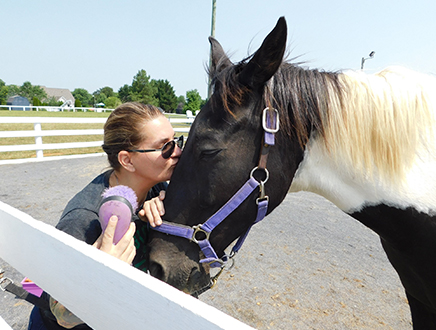
“The bond between horses and humans is one of the most enduring and transformative relationships in human history,” says Kay Barkwill, CEO of Horses with Hearts. “This bond is built on a partnership of trust. At its heart, the horse and human connection is about communication without words. Horses reflect our energy, emotions and intentions. They respond to who we are, not what we say. Working with them teaches patience, emotional regulation and leadership through empathy.”
Horses with Hearts works with veterans and other individuals suffering from post-traumatic stress disorder as well as those dealing with anxiety and depression. Programs like Equine Assisted Learning help participants navigate emotional regulation, boundaries and communication skills. Participants learn by observing the horse’s responses and adjusting their behavior to achieve goals, lessons that carry over into their relationships with people.
Not just any horse can be in the program—they are selected based on their personality.
“We look specifically for horses that enjoy the company of people and who have a personality to want to interact, have low to no kick or bite response and have a low flight response,” Barkwill says. “They pick up on what the participant needs and help them obtain their particular goals.”
Barkwell says allowing individuals to share their stories with the horse builds a lasting impact on those who participate in Equine Assisted Learning.
“The emotional connection to the horses is where the power is, knowing the horse is the motivation that keeps the participants wanting to come back,” Barkwell says.
Music therapy in West Virginia has grown from post-World War II efforts to support veterans to a fully developed network of professional music therapists today. Abby Dodds, board chair of the West Virginia Music Therapy Association, emphasizes the versatility of music in mental health care.
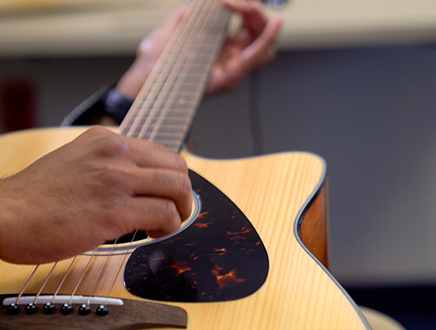
Hannah Maxwell.
“The overall goal of music therapy is for clients to generalize skills learned or practiced in session into other areas of their lives,” Dodds says.
Sessions may include passive engagement, like listening, or active participation, like songwriting, improvisation or performance. Music therapy can help with emotion regulation, social skills, cognitive development, stress reduction and nervous system regulation, among many other benefits. When clients come in, they each receive an individualized treatment plan based on their needs and goals.
“All music therapists are trained to address challenges in each domain, and many go on to receive specialized training in areas like human development, trauma-informed psychotherapy or neurologic rehabilitation,” Dodds says. “Depending on each client’s goals, music therapists work to identify opportunities for integrating these skills into their clients’ lives outside of music therapy.”
Dodds looks at music therapy as a sort of holistic approach, with the goal of helping clients use the skills they learn in their everyday lives.
“I think what makes music so powerful is its versatility,” Dodds says. “As a music therapist, I can use music to motivate someone to do something that otherwise feels daunting or undesirable, and I can also use it to help someone process the root of their anxious or depressive symptoms.”
Erica Marks, director of the Yew Mountain Center, sees a natural environment as a therapeutic tool.
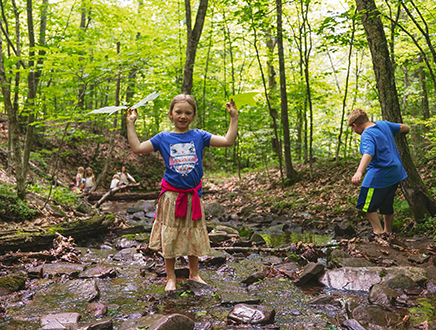
“Out on a trail, beside a waterfall or next to a pond, people are immersed in sensory experiences and observe life unfold at a different pace than in our human-built environments,” Marks says.
Yew Mountain Center offers retreats, school programs and arts-based workshops that foster mental and emotional well-being outdoors. Students, teachers, veterans and community members can experience nature while engaging in reflective activities, arts and wellness practices. The center ensures accessibility and inclusivity for all participants from different backgrounds.
Aside from retreats, Yew Mountain Center also offers educational workshops for those interested in learning more about the outdoors. Different workshops include how to forage mushrooms and cultivate medical plants. Overall, Marks emphasizes that the calm of nature can help heal what different individuals might be dealing with.
“It may take a while, but in wild places the mind quiets and focuses, movement becomes more mindful and perspectives can shift,” Marks says.
West Virginia’s unique mental health programs show that healing can happen far beyond a counselor’s office. Whether through art, animals, music or nature, residents of the Mountain State are discovering new ways to express emotions, build resilience and deepen their connections to themselves, others and the world around them.