


In West Virginia, many vulnerable populations are at risk due to a lack of legal support. However, organizations within the state are working to address this problem through promoting legal advocacy, where attorneys and volunteers represent individuals facing adversity and do their best to help reach a favorable and just outcome.
In circumstances where an individual faces prosecution but cannot afford to pay for private legal counsel, the State of West Virginia’s indigent defense system steps in to provide attorneys who can help represent them. These advocates are known as public defenders and represent clients in criminal cases as well as abuse and neglect matters.
The indigent defense system consists of salaried attorneys and staff as well as private counsel workers whose invoices are paid by Public Defender Services (PDS).
The counsel assigned to a case or proceeding is determined by the circuit court presiding over it. If a public defender corporation operates within a judicial circuit, that corporation is appointed. If, in these situations, there is any conflict or the corporation is not operating at the time, the circuit court appoints an attorney from a list it maintains of those willing to take court appointments. Dana Eddy, executive director of PDS, says over 90% of criminal cases are handled by these advocates.
“These advocates are inextricably linked to the state’s legal community,” Eddy says. “The willingness of these advocates to work with public defender corporations or to take court appointments relieves other attorneys from being asked or mandated to assist the courts in resolving criminal cases and child abuse and neglect cases.”
Eddy explains that the main difference between court-appointed public defenders and private counsel is the difference in staff.
“Accordingly, private counsel may expend substantial effort to provide services that would be done by the staff of a public defender corporation,” she says. “PDS is committed to closing this gap in resources and is working with a national systems builder to do so.”
Eddy says PDS promotes a holistic defense, a collaborative effort that addresses both the underlying causes of the offense and the consequences of conviction.
“Accordingly, attorneys also advocate for the resources clients need to address reasons for involvement in the criminal justice system or the child protective process,” Eddy says. “These reasons include substance use, untreated trauma, mental health issues or the lack of basic human needs such as food, transportation or shelter.”
Another point of advocacy, which works to increase access to counsel and guide individuals through the complex legal system, is pro bono work. Legal Aid of West Virginia (LAWV), a statewide nonprofit organization, provides these free legal services to eligible candidates with a mission of empowering individuals and strengthening communities.
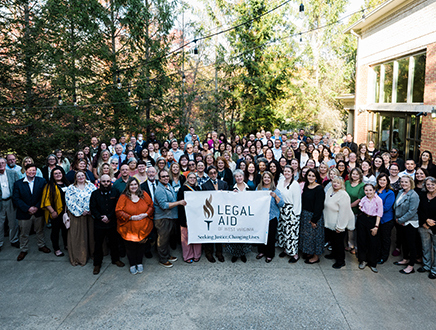
LAWV’s work fits into three primary areas: civil legal services, behavioral health advocacy and long-term care advocacy. While public defenders are available for criminal cases, they generally cannot be deployed on most civil matters. This is where LAWV steps in, taking on things such as child custody, domestic violence, expungement and driver’s license restoration. The organization also serves individuals with mental or behavioral diagnoses and residents in long-term care facilities.
“Although these services are not always traditional legal representation, they are essential forms of advocacy that work in tandem to improve outcomes and quality of life for West Virginians,” says Kate White, executive director of LAWV.
With the high demand attorneys face, they often feel they do not have the time for pro bono work. However, LAWV is working to address those barriers by offering alternative, more flexible contributions such as teaching a legal education class or assisting with paperwork.
White says the rewards of pro bono work far outweigh the challenges.
“Pro bono work offers the opportunity to make a direct, tangible difference in someone’s life—helping a family remain in their home, establishing safety for a survivor of domestic violence or enabling someone to move forward by securing an expungement for a past mistake,” she says. “It is also deeply fulfilling on both a personal and professional level, reconnecting attorneys with the fundamental purpose of the legal profession: to serve others and advance justice.”
Children facing harm make up a notable portion of the state’s most vulnerable population. When working with cases like this, it is essential that the courts understand the child’s situation and what needs must be met to ensure their long-term well-being.
 Court Appointed Special Advocates (CASA) is dedicated to advocating for these children and works to guarantee that each child has a safe and permanent home where they can thrive.
“The guiding principle that drives CASA’s core work is that children grow and develop best with their family of origin when that can be safely achieved,” says Shanna Gray, state director of West Virginia CASA Association, Inc.
West Virginia CASA programs recruit, screen, train and supervise community volunteers who work with children and families to gather information they can use to make recommendations to the court. This involves working alongside judges, attorneys, social workers, child welfare professionals, teachers and service providers to determine the best course of action.
“The role of a CASA advocate does not replace the need for attorneys or social workers but rather adds another informed perspective focused solely on the child’s best interests,” Gray says.
For a 12-year-old girl named Sarah, whose name has been changed for privacy, CASA led her from spending three years in foster care to living in a happy, healthy and permanent environment.
By getting to know her and earning her trust, Sarah’s CASA volunteer, Patti, learned about her positive relationship with her grandmother, a connection that had not yet been explored.
“Thanks to that advocacy, Sarah was eventually adopted by her paternal grandmother,” Gray says. “Today, she is thriving. She is excelling in school and pursuing her passion for art.”
Legal advocacy not only provides the justice that vulnerable individuals deserve but often changes the trajectory of their lives. Legal support is essential, and the advocates standing by their clients are doing their due diligence to improve the state’s law sector and bring justice to West Virginians.
When Students Serve: WVU Law Clinics
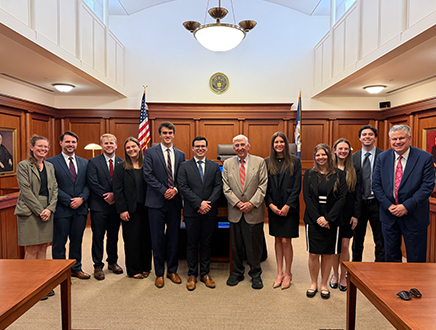
At the West Virginia University (WVU) College of Law, students have the opportunity to join one of the university’s law clinics, where they can represent real clients while supervised by faculty. This not only gives students hands-on experience, but it also provides pro bono legal assistance to clients in need.
WVU Law clinics cover veteran advocacy, land use and sustainable development, wrongful convictions, general litigation, immigration and U.S. Supreme Court cases. By filling out an application form, those seeking legal help from the law clinics can be considered for eligibility, which is evaluated on an individual basis.
“Students work with faculty to conduct interviews, prepare briefs, appear in court, negotiate and travel to visit clients,” says Katherine Garvey, director of clinical education at the WVU College of Law. “Across all six clinics, we deliver more than 29,000 hours of free legal services each year.”
Garvey explains that the law clinic experience helps prepare students for their careers in the law field.
“Our clinics allow students to apply what they’ve learned in skills-based classes like Trial Advocacy and Appellate Advocacy by advocating for clients in and out of court under faculty supervision,” she says.