


Perspectives on the 50 by 50 Energy Plan
By Kenzie Dye
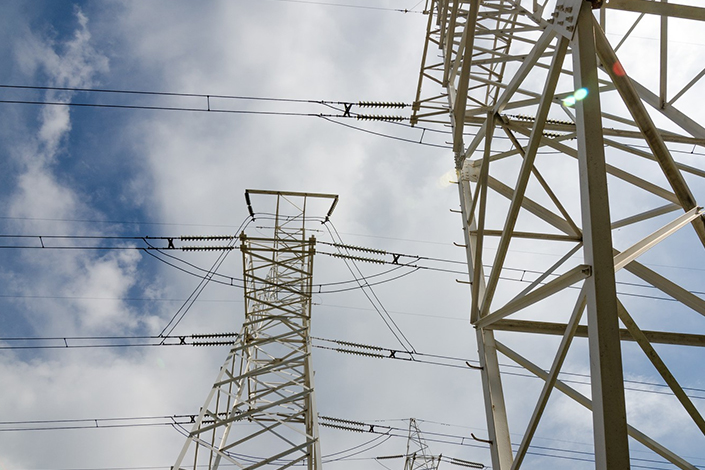
The energy strategy emerging from West Virginia’s capitol building is centered around the 50 by 50 plan, which aims to increase the state’s energy capacity to 50 gigawatts by 2050.
“We’re not going to sit back while energy demand rises. We’re going to meet it,” Governor Patrick Morrisey says. “The 50 by 50 plan sets a clear path to expand generation, strengthen our grid and keep West Virginia at the center of America’s energy future. This is about creating jobs, driving investment and making sure our state is leading when it comes to energy production.”
The plan positions West Virginia as a primary supplier within the Pennsylvania-New Jersey-Maryland (PJM) Interconnection.
“As demand grows, states that can produce dependable power will lead,” he says. “That is where we have an advantage. We’re going to expand our role in the PJM and make sure we’re a top supplier of reliable energy across the region.”
Morrisey says this growth is intended to support construction and long-term employment while signaling that West Virginia is open for energy business. The administration is also working to streamline permitting in order to bypass regulatory hurdles. He says the state has worked closely with utilities to integrate new capacity while maintaining system reliability.
The success of the plan will be measured by energy production, additional jobs and lower costs for West Virginians.
“In the near term, that means bringing new generation online,” Morrisey says. “Over time, it means sustained economic growth, reliable power and a stronger position as an energy leader. We’ll measure that through increased capacity, stable energy prices and continued investment in the state.”
Nicholas Preservati, deputy secretary for the West Virginia Department of Commerce and director of the West Virginia Office of Energy, says 50 by 50 functions as a power roadmap and economic development tool.
The plan is driven largely by the estimated needs of data centers and other energy-intensive industries. Preservati says this projected load growth was an integral part of its framework, with the state aiming to increase capacity to support both new commercial investments and existing residential demand.
To manage this, the Office of Energy is coordinating with utilities on generation targets and grid integration. Preservati says the state is pursuing a comprehensive portfolio that includes coal, natural gas, nuclear, utility-scale solar, wind, geothermal, hydrogen, hydropower, distributed solar and battery storage.
“While the state is best positioned for baseload production due to factors such as geography and existing infrastructure, renewables and emerging technologies like nuclear complement that foundation,” he says.
Economic impact remains the primary metric for the plan’s success. Preservati says increased generation attracts private investment and positions West Virginia as a competitive destination for energy-intensive industries.
As West Virginia works toward this massive expansion of its energy portfolio, utility leaders say the state is uniquely positioned to anchor the regional power grid. Chris Beam, vice president of generation project development for FirstEnergy, says the state’s existing infrastructure provides a strategic advantage within the PJM.
The state’s foundation of existing power generation and access to major transmission lines make it a natural fit for meeting future energy needs. Because West Virginia remains a regulated state, Beam says the benefits of local production flow directly back to the average resident.
“Energy produced here can help lower electricity costs for customers,” he says. “That helps keep electric rates more stable and protects customers from the price swings seen in states with deregulated markets.”
This regulatory framework is also intended to balance the competing needs of large industrial users and residential ratepayers. While large power users require constant access to electricity to grow, Beam says the state’s oversight ensures residential families are not exposed to unpredictable market prices.
Reaching the goals of the 50 by 50 plan requires navigating a complex regulatory landscape. Beam identifies lengthy permitting processes, evolving federal rules and delays in grid connection as significant hurdles.
“By working closely with the Public Service Commission and aligning with the governor’s 50 by 50 plan, West Virginia is helping ensure energy policy keeps pace with economic growth while continuing to protect customers,” Beam says.
Delegate Daniel Linville, chairman of the House Committee on Environment, Infrastructure and Technology, says the state’s approach is designed to be entirely market-driven while prioritizing local economic benefits.
He says the benefits of the 50 by 50 plan extend beyond the power plants themselves. Property taxes from these facilities provide critical support for schools, fire departments and police, while the electricity users, such as the growing data center industry, create additional career paths.
According to Linville, the primary obstacles to reaching 50 gigawatts of generation are not confined to Charleston. He says the most significant hurdles, ranging from the PJM queue to the Federal Energy Regulatory Commission, are at the federal level. As the plan progresses, Linville says the impact on West Virginia communities will be impossible to miss.
“It will be incredibly transparent that new power plants are being built, new careers are brought to an area and an enormous amount of funding and opportunity are brought to communities all across our state,” he says.
While proponents of the 50 by 50 plan highlight economic growth, some lawmakers warn that mass construction of power plants carries significant financial and environmental risks. Delegate and Deputy Minority Leader Evan Hansen says the success of the policy hinges on whether the projected surge in electricity demand actually materializes.
“Average West Virginians may be left footing the bill for these expensive projects if they’re based on bad projections of future electricity demand,” Hansen says.
He points to the West Virginia Load Forecast Accountability Act as a necessary tool to prevent utilities from spending millions of dollars on stranded assets. Hansen says if these projections are overblown, residential ratepayers and large consumers will be the ones held responsible for the costs.
Environmental and quality-of-life concerns are significant. Because the state’s 2025 energy legislation made certain local ordinances and zoning invalid for microgrids, Hansen says communities have lost the ability to regulate noise, light and traffic.
“Longstanding local rules are now unenforceable regarding setbacks between power plants and data centers and residential communities,” he says. “The Legislature should revisit this policy to restore local control.”
Hansen also expresses concern over how the benefits of these projects are distributed. He says House Bill 2014 redirects property tax revenue away from the municipalities and school systems most impacted by new developments, instead using half of those funds to reduce state income taxes.
While the governor has focused on traditional baseload and nuclear power for the plan, Hansen says wind and solar are cheaper alternatives that do not fluctuate with fuel prices.
“Solar generation, for example, is highest during those few hours in the summer when electricity demand is highest,” he says. “The more solar is installed, the less need there is for more expensive power plants to be built to serve only those few hours each year.”
While Hansen says nuclear power should remain on the table as a carbon-free source, he is wary of its high costs compared to battery storage and renewables. For Hansen, the path to 50 gigawatts requires more than construction.
“It’s imperative that project developers and state agencies provide accurate and timely information to people and local governments so they can weigh in based on facts rather than rumors,” he says.